Evidence · 2026-08-28
Building AI Systems That Can Show Their Work
When an AI system affects an engineering decision, the output is only one part of the product. The path to that output must remain inspectable.
An answer without provenance asks the reviewer to trust the system’s memory. A useful system lets the reviewer inspect the sources, the scope, the transformation and the exception that shaped the result.
Evidence is a product surface
Evidence should not be a debug log that engineers open after something goes wrong. It belongs in the workflow: attached to the requirement, connected to the relevant model element or document, and available at the moment someone evaluates the finding.
Model the relationships
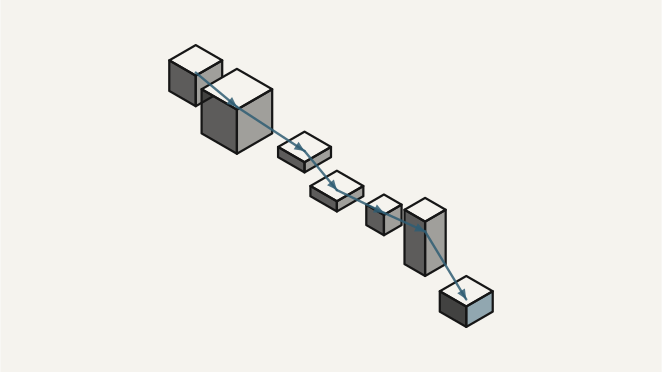
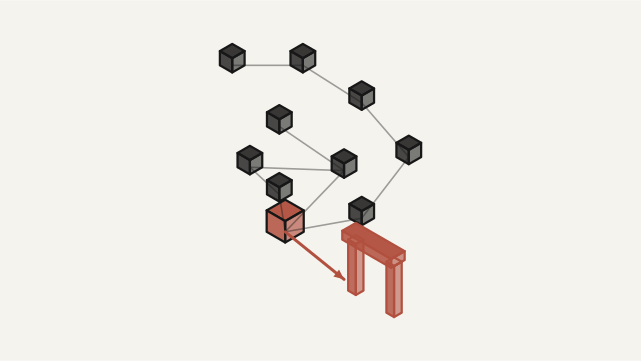
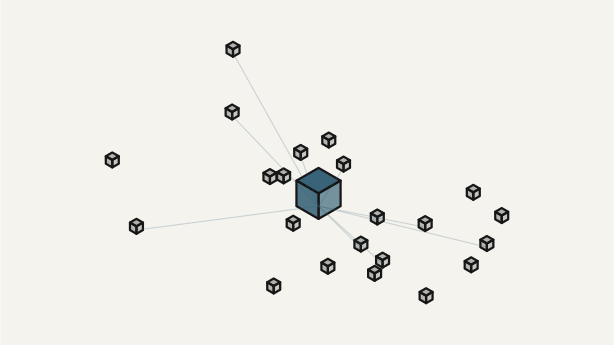
A flat list of citations is often not enough. A reviewer needs to see how a requirement selected a population, how a source informed an attribute, how a predicate evaluated that attribute and where a counterexample entered the chain.
That relationship model makes the system legible. It also creates a better boundary for AI: the model can traverse, classify and propose connections while the application preserves the structure needed for verification.
Prefer failure that can be inspected
“The model was uncertain” is not a useful engineering outcome. “One of fourteen fixtures is below the threshold; here is the schedule row, model instance and measured value” is a useful failure because it gives the reviewer a next action.
Traceability is not decoration around intelligence. It is how intelligence becomes usable in a governed workflow.
Keep the conclusion smaller than the investigation
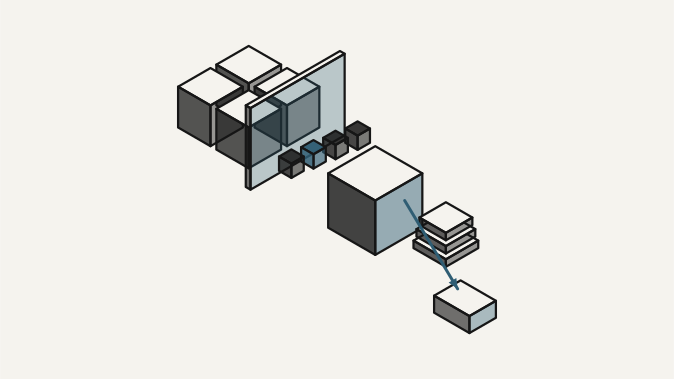
Investigation can be broad and probabilistic. Determination should be narrow and explicit. The product should preserve the larger evidence set while making the final rule easy to understand: what was checked, what passed, what failed and who owns the decision.
The Evidence Graph and Field Guide describe this pattern in more detail.
Keep exploring
More notes on AI systems, engineering workflows and verifiable product work.